A gunite pool is built shape by shape on your property, not dropped in as a pre-made shell — here's what that process actually looks like in the Rio Grande Valley.
Gunite pool construction in McAllen starts the same way most concrete pools do anywhere: a design consultation, a permit pulled through the City of McAllen, and an excavation crew that digs the shape of your future pool into the ground. What's different here is what's under the topsoil — a lot of Rio Grande Valley lots sit over caliche, a dense chalky layer that slows excavation down and sometimes calls for heavier equipment than a standard dig.
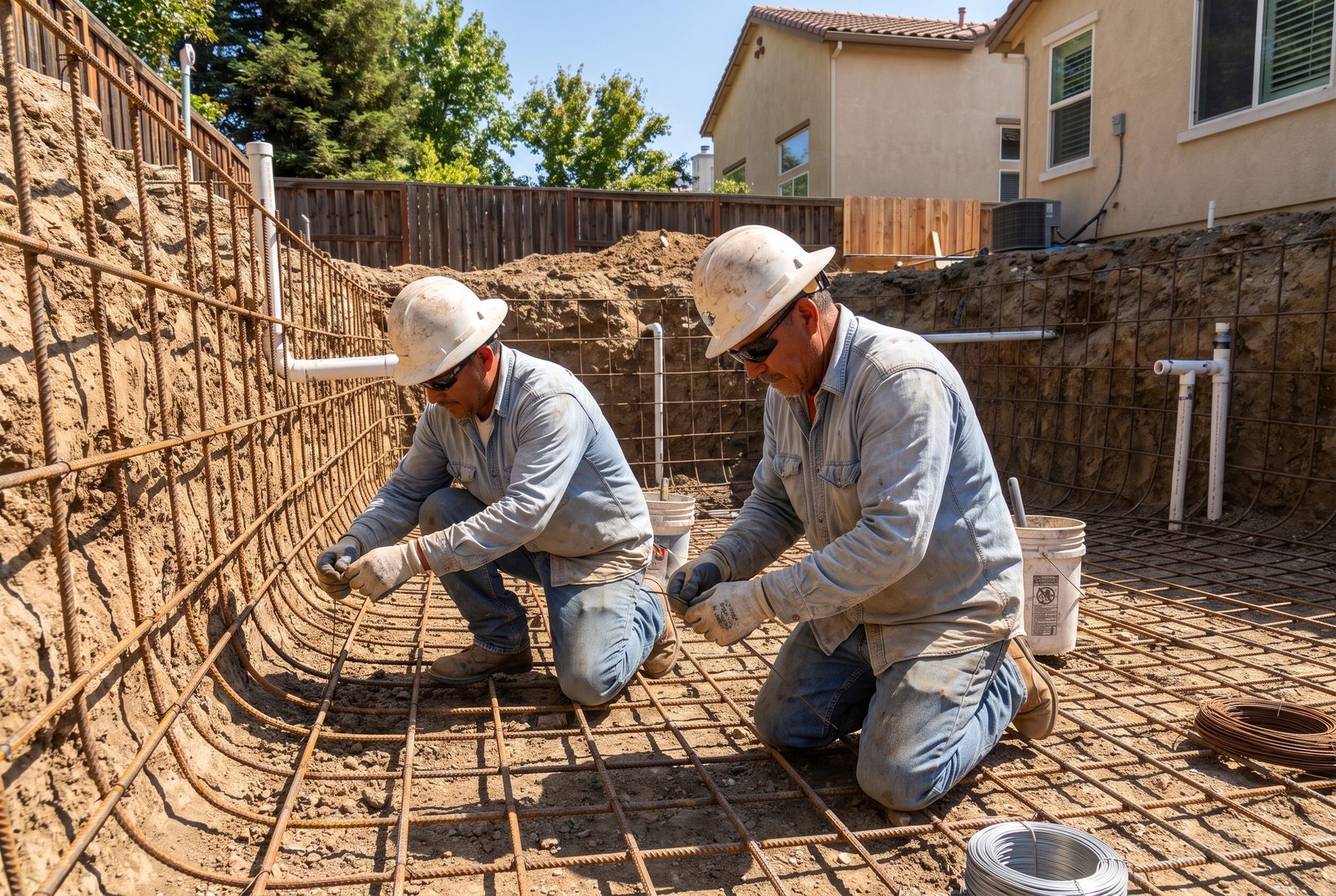
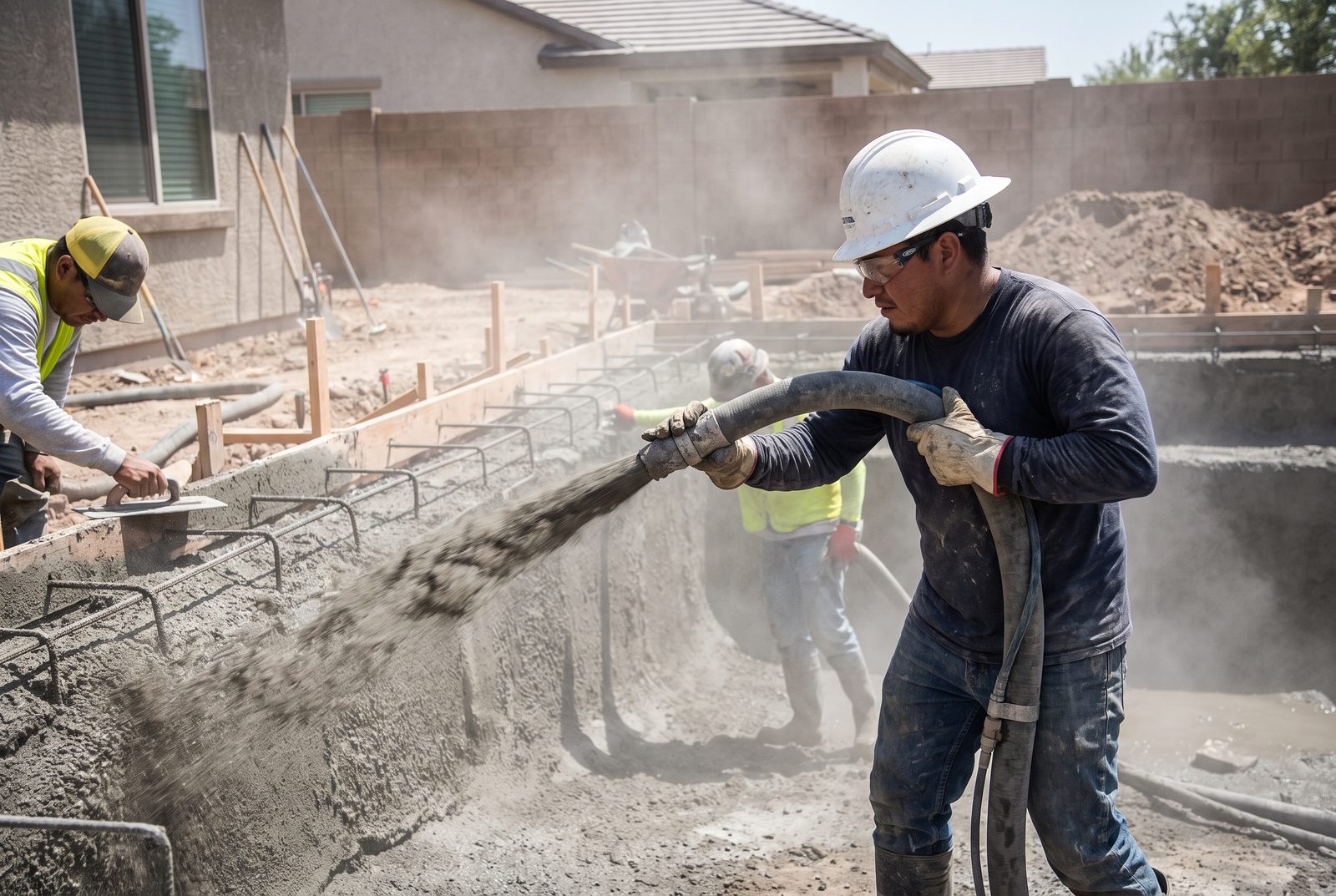
After excavation, a steel rebar frame goes in first, following the exact shape and depth of the pool design. Gunite — a sprayed concrete mix — is then applied over that steel frame, building up the walls and floor of the shell. Once the gunite cures for about a week, plumbing and electrical get roughed in, the interior finish (plaster, pebble, or quartz) goes on, and the decking around the pool is formed and poured last.
Gunite makes sense when your lot has an irregular shape, when you're planning a tanning ledge, attached spa, or custom steps, or when you want a pool that can be built and finished exactly to your design rather than fit into a standard shell size. It's also the right call if you're planning to build the pool, decking, and outdoor kitchen or patio as one connected project.
Caliche forms when calcium carbonate binds soil particles together into a hard, chalky layer, and it's common across South Texas including the McAllen area. Standard excavation equipment can usually break through it, but it takes longer than digging through loose soil, and on some lots it calls for a piece of specialized equipment. A pool builder who's dug in the Valley before will plan for it instead of discovering it mid-job.
Custom gunite pools generally run $50,000 to $100,000. What moves you up or down that range: pool size and depth, how much decking you want, whether caliche shows up on your lot, added features like a spa or water feature, and the interior finish you choose — plaster is the least expensive option, while pebble and quartz finishes cost more but last longer before needing a redo.
Choose gunite if your yard has an odd shape, you want a fully custom design, or you're building features like a spa or tanning ledge into the same project. Choose fiberglass instead if you want a faster install, a lower price point, and less ongoing chemical maintenance, and a standard shell shape works fine for your space.
Most gunite pools take six to ten weeks from excavation to first swim. Curing the shell alone takes about a week before the interior finish can go on, and decking needs its own curing time before it's safe to walk on.
A gunite shell is built on site — steel rebar, sprayed concrete, and hand-finished decking — instead of arriving pre-formed. That labor and time is what drives the higher price, along with the design flexibility it buys you.
Yes, that's the main advantage over fiberglass. Since the shell is shaped with steel and sprayed concrete rather than pulled from a mold, you can build around trees, property lines, tanning ledges, spas, and irregular lot shapes.