Cracked plaster, peeling tile, and outdated pools don't need a teardown — here's what a remodel actually fixes.
Pool remodeling in McAllen covers everything from a simple resurface to a full update of an older pool's finish, tile, decking, and features. Most remodel calls start the same way: a homeowner notices cracking plaster, a rough or stained surface, or a pool that's just starting to look dated compared to the rest of a renovated backyard.
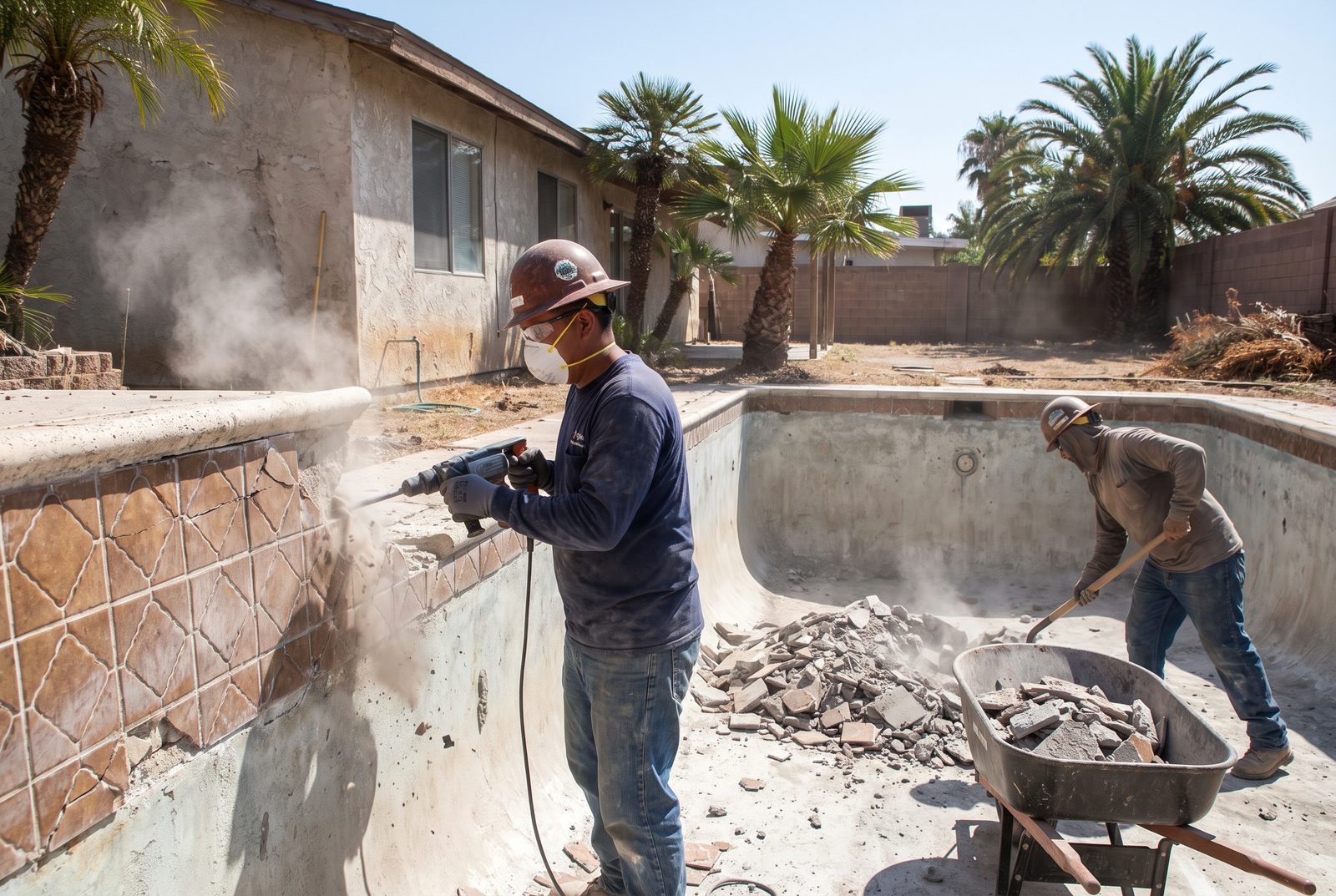
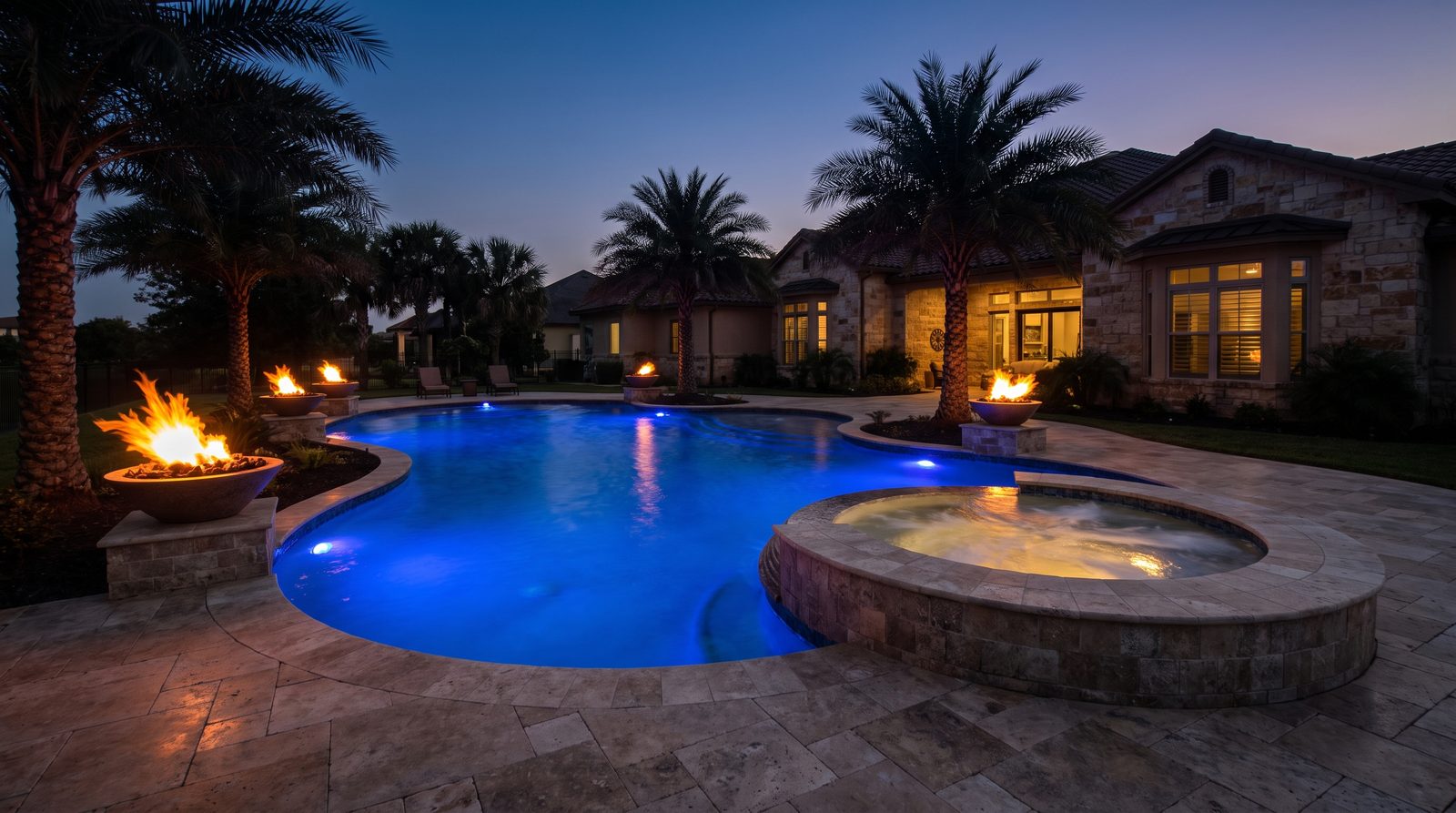
A typical remodel starts by draining the pool and inspecting the shell for cracks or structural issues. The old interior finish gets chipped out, the waterline tile is replaced if it's failing, and a new plaster, pebble, or quartz finish is applied. Decking can be resurfaced or replaced at the same time, and this is also when most homeowners add features like a spa, sun shelf, or updated lighting.
Watch for visible cracks in the plaster, a rough or pitted surface that scrapes skin, tile that's loose or falling off the waterline, or a pool that's losing water faster than evaporation would explain. Any of those point to a finish or shell issue that gets more expensive to fix the longer it sits.
Plaster is a porous material, and years of chemical exposure, sun, and water movement slowly wear down its surface. Once small cracks form, water works its way in and widens them, which is why a resurface that starts as a cosmetic fix can turn into a bigger structural repair if it's put off too long.
Resurfacing alone typically runs $8,000 to $15,000, depending on pool size and finish choice. Adding tile replacement, decking work, or new features like a spa or water feature raises that number. The condition of the shell underneath the old finish also matters — a clean resurface costs less than one that turns up structural cracks once the old plaster is chipped away.
A resurface alone makes sense if the shell is sound and you're just dealing with worn plaster or fading color. A fuller remodel makes sense if you're also dealing with failing tile, dated decking, or you want to add features like a spa while the pool is already drained. We'll tell you honestly which one your pool needs during the site visit.
Plaster finishes on gunite pools generally need resurfacing every seven to ten years. Pebble and quartz finishes last longer, often 15 to 20 years, before they need attention.
Resurfacing typically runs $8,000 to $15,000 depending on pool size and the finish you choose. Plaster is the least expensive option, while pebble and quartz finishes cost more upfront but last longer between redos.
Yes, remodeling is a common time to add a spa, sun shelf, waterfall, or updated lighting, since the pool is already being worked on and some of that plumbing and electrical work can be done alongside the resurfacing.