Serving McAllen & the Rio Grande Valley
Custom Pool Builder in McAllen, TX
Gunite and fiberglass pools designed and built for South Texas backyards — from the first excavation shovel to the day you jump in.
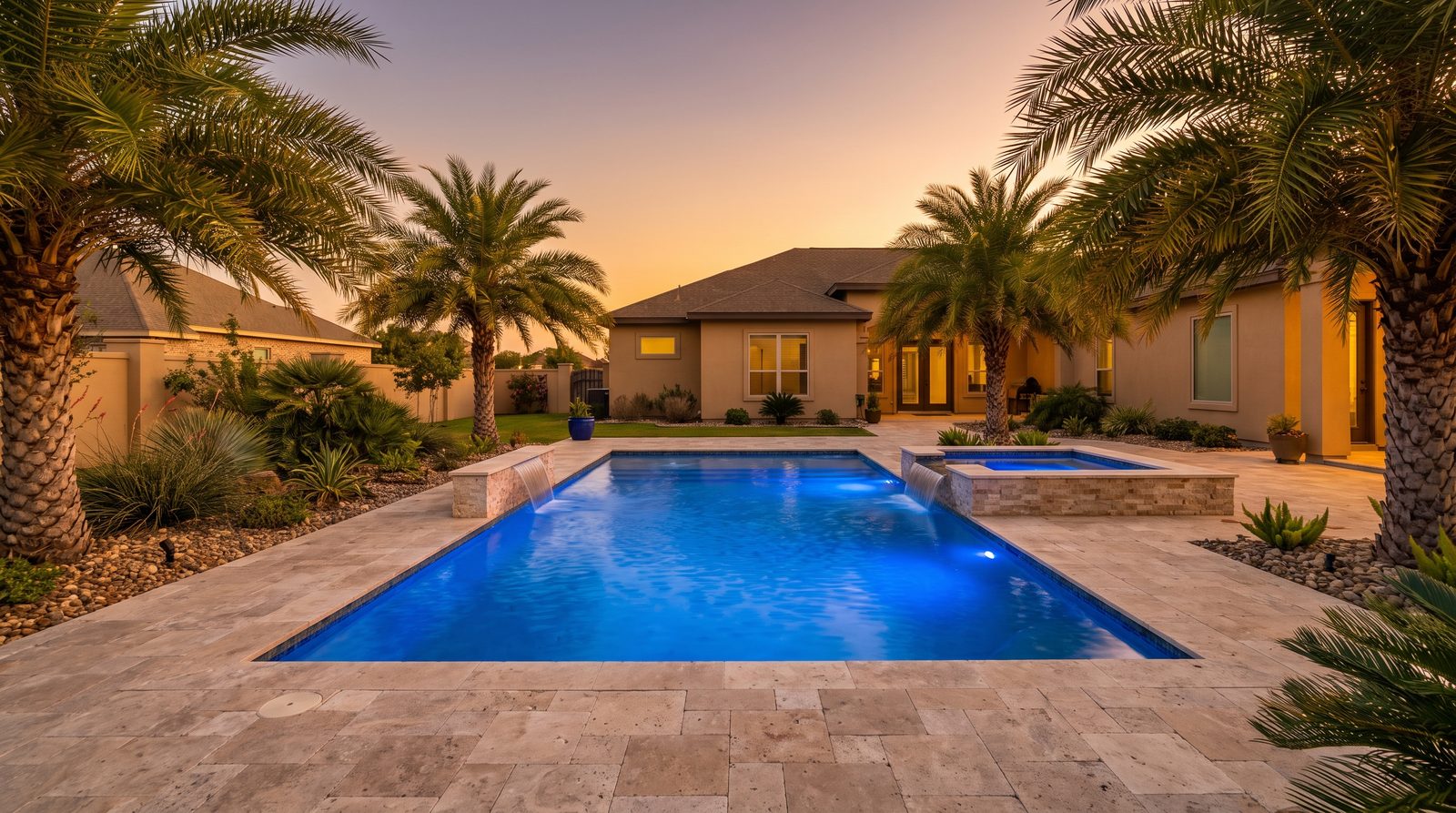
Gunite and fiberglass pools designed and built for South Texas backyards — from the first excavation shovel to the day you jump in.
Pool building covers everything between an empty backyard and a finished swimming pool: excavation, structural work (steel and gunite, or a fiberglass shell), plumbing, electrical, decking, and the final fill and startup. In McAllen, that also means working around caliche soil, permitting through the city, and building in a way that holds up to summer heat that regularly tops 100°F.
Homeowners across the Rio Grande Valley bring in a pool builder for a brand-new inground pool, a fiberglass shell install, or a full remodel of an aging pool that's cracking, leaking, or just outdated. Whichever one you need, the process starts with a site visit to look at your yard, soil, and drainage before any digging happens.
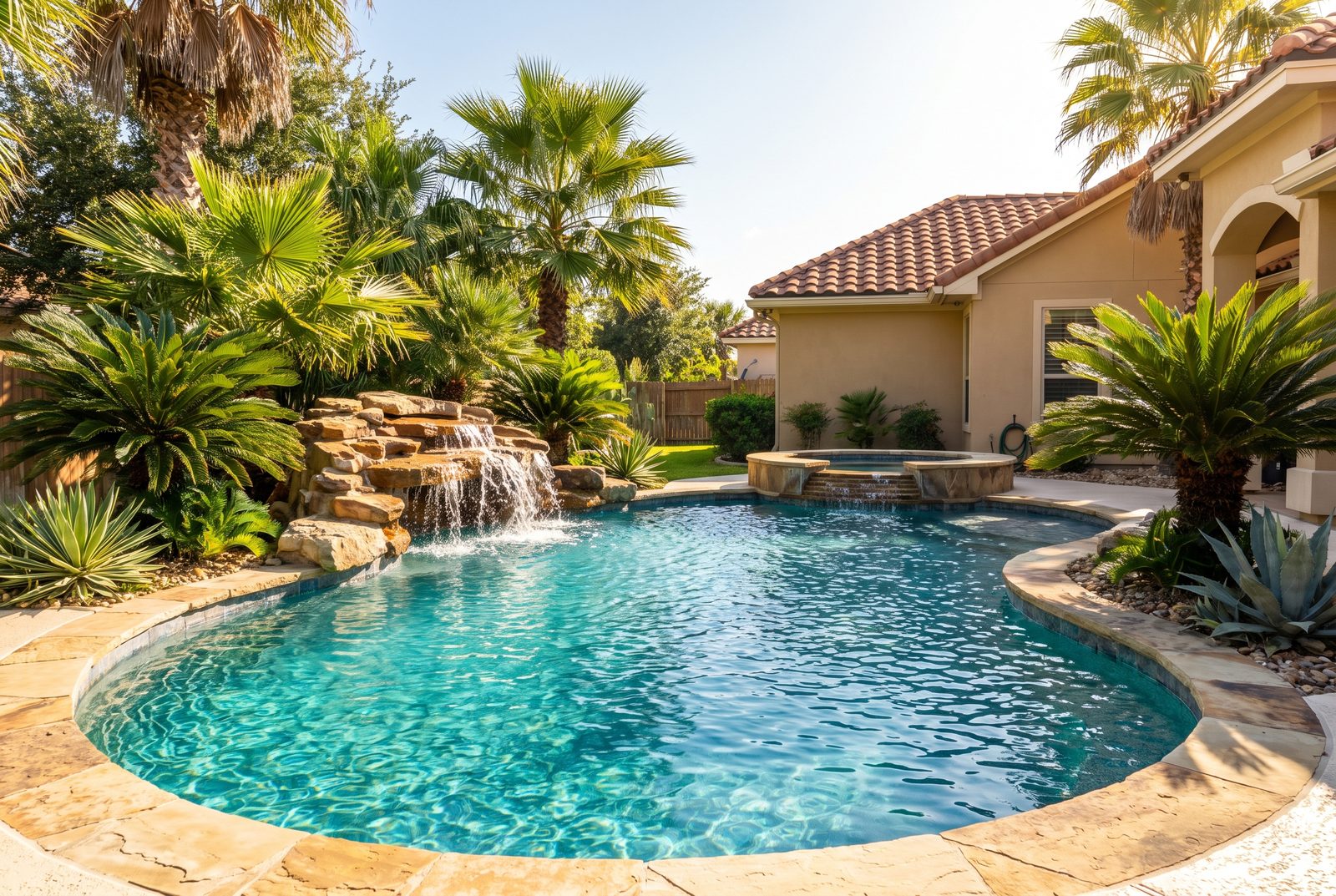
Six services covering the whole life of a backyard pool, from an empty lot to a twenty-year-old shell that needs bringing back.
A custom shell built on site with steel and sprayed concrete. Any shape, any depth, and a structure that commonly lasts 50 years.
A pre-formed shell set, plumbed, and swimmable in one to two weeks, with a surface our hard water can't etch.
New plaster, quartz, or pebble when the old finish turns rough, flakes, or stains past what an acid wash can fix.
Tile, coping, decking, equipment, and shape changes like a sun shelf or attached spa, done in one drained window.
Concrete, pavers, or travertine, chosen so the surface stays walkable barefoot through a McAllen August.
Pressure and dye testing to find where water is going, plus the free bucket test that tells you if it's a leak at all.
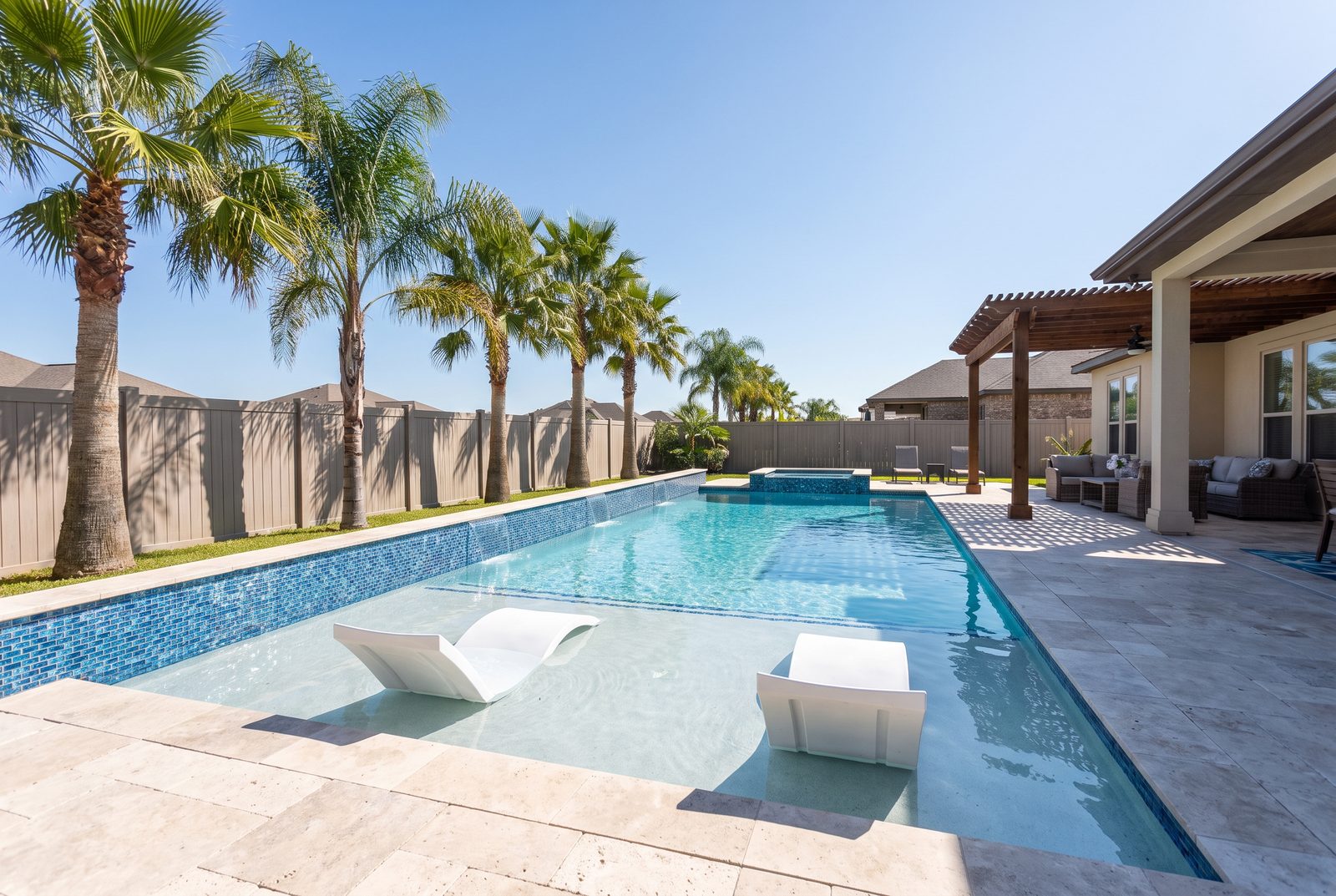
The process starts with a site visit and a design consultation, where we walk your yard, check soil conditions, and talk through size, depth, and features. From there, we pull the required swimming pool permit through the City of McAllen and schedule inspections at each stage.
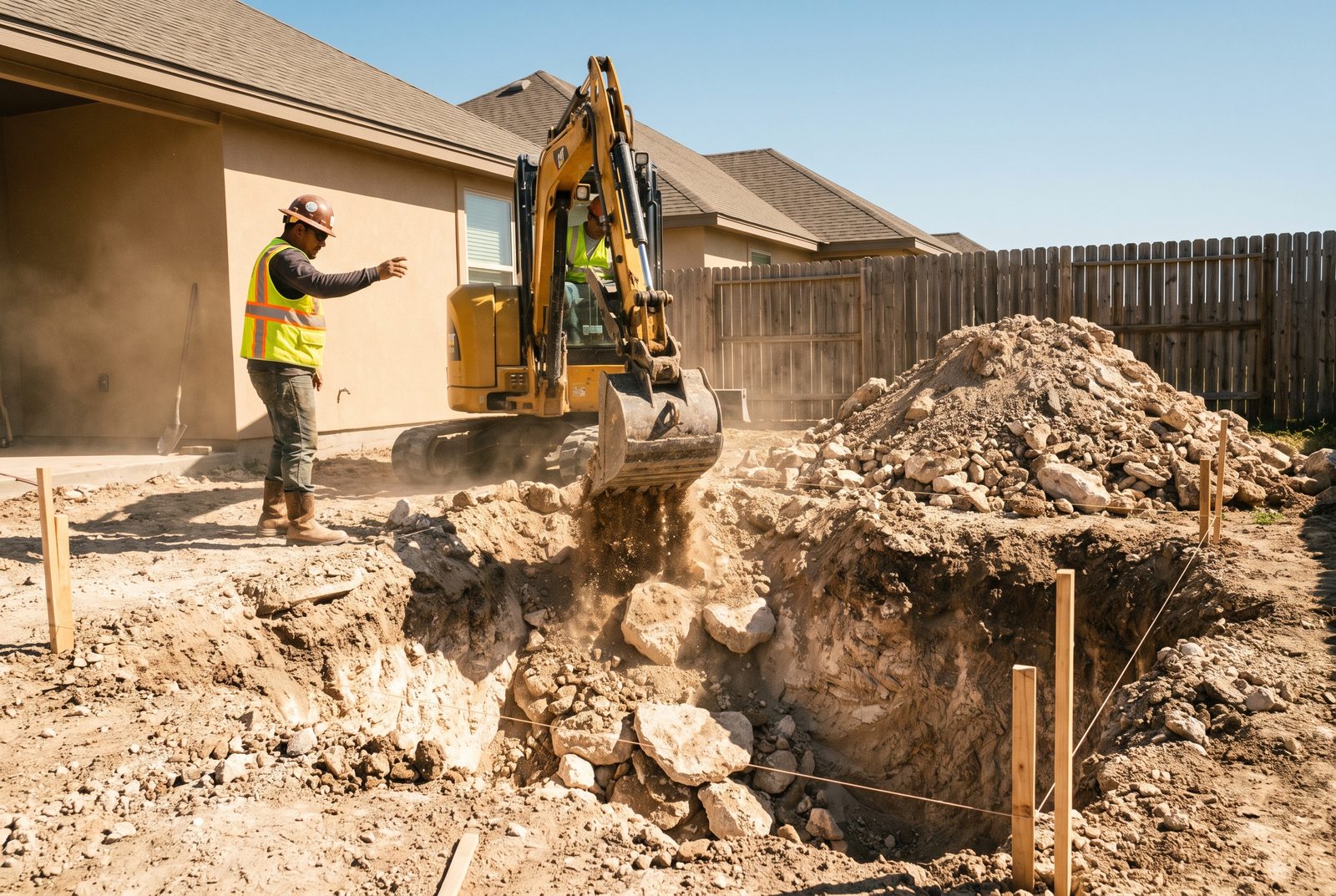
Excavation comes next, and it is the stage where an experienced pool excavation contractor earns their keep. Because a lot of Rio Grande Valley lots sit over caliche, a dense chalky layer under the topsoil, this step can take longer than it would on plain dirt. For gunite pools, steel rebar goes in first, followed by the gunite shell, a curing period, interior finish, and decking. Fiberglass installs move faster since the shell arrives pre-formed and just needs to be set, leveled, and plumbed.
We pull the required City of McAllen swimming pool permit and schedule every inspection so you're not the one chasing down city paperwork mid-project.
Caliche shows up on a lot of Valley lots. We plan excavation equipment and timelines around it instead of getting surprised halfway through the dig.
You call one number and reach the team building your pool — not a call center reading a script off a screen.
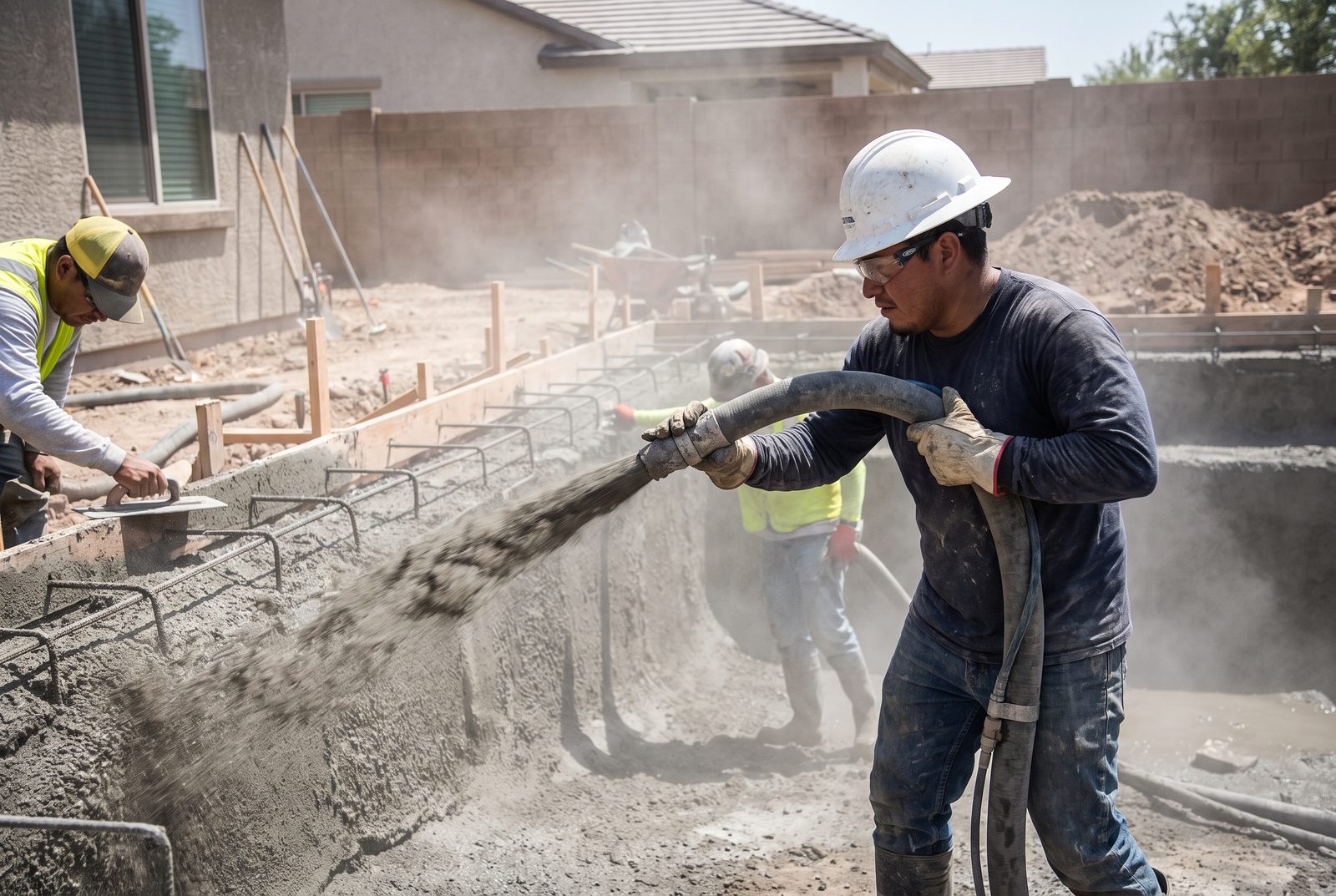
Fiberglass pools typically run between $20,000 and $40,000 depending on the shell size and depth you choose. Custom gunite pools run higher, generally $50,000 to $100,000, since each one is excavated, framed with steel, and shaped on site rather than dropped in as a pre-made shell.
A few things move those numbers in either direction: caliche excavation, decking material and square footage, water features like a spa or waterfall, and how far your yard is from the street access a crew needs for equipment. We walk through your specific cost factors during the free on-site estimate, not after the contract is signed.
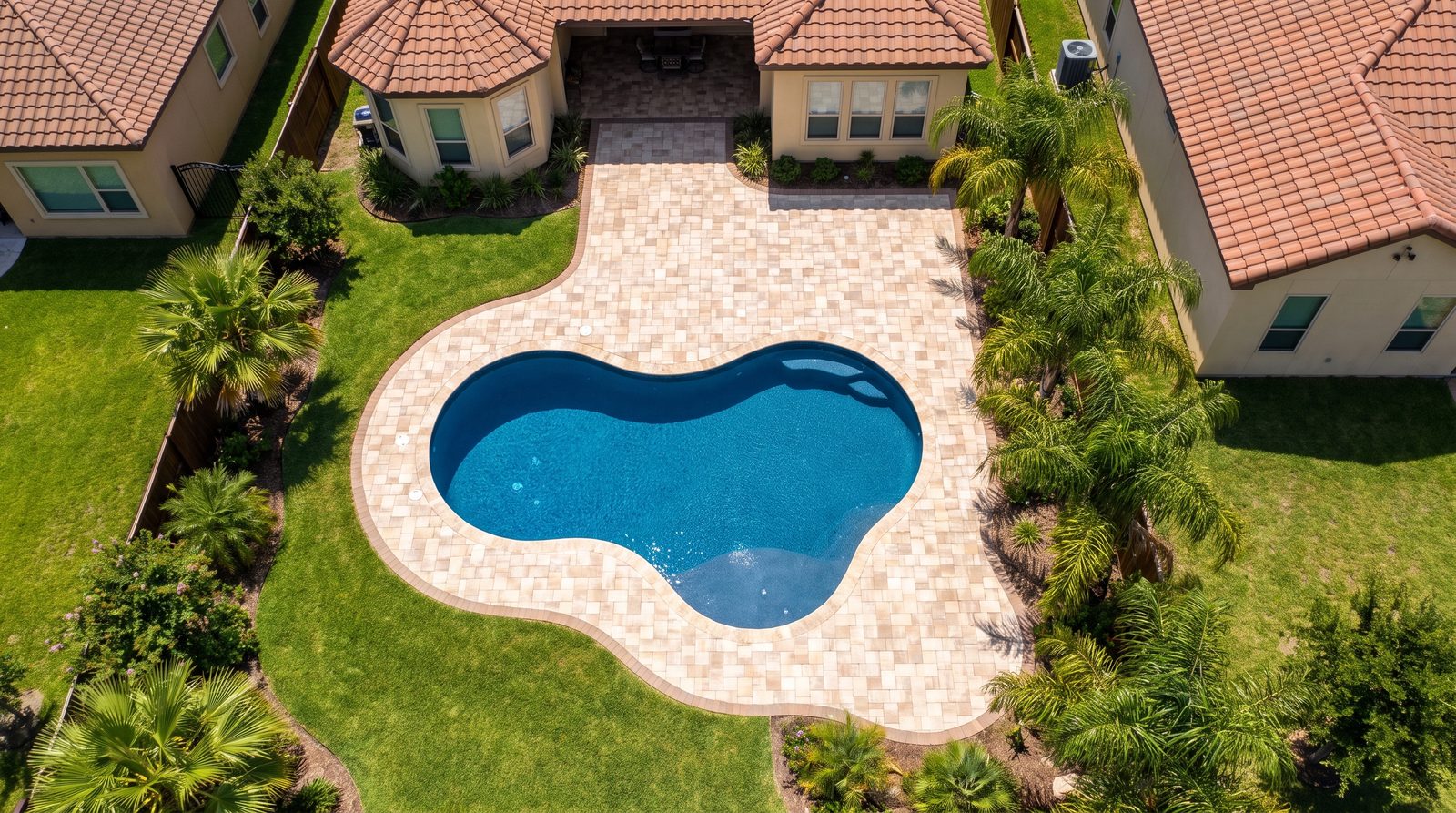
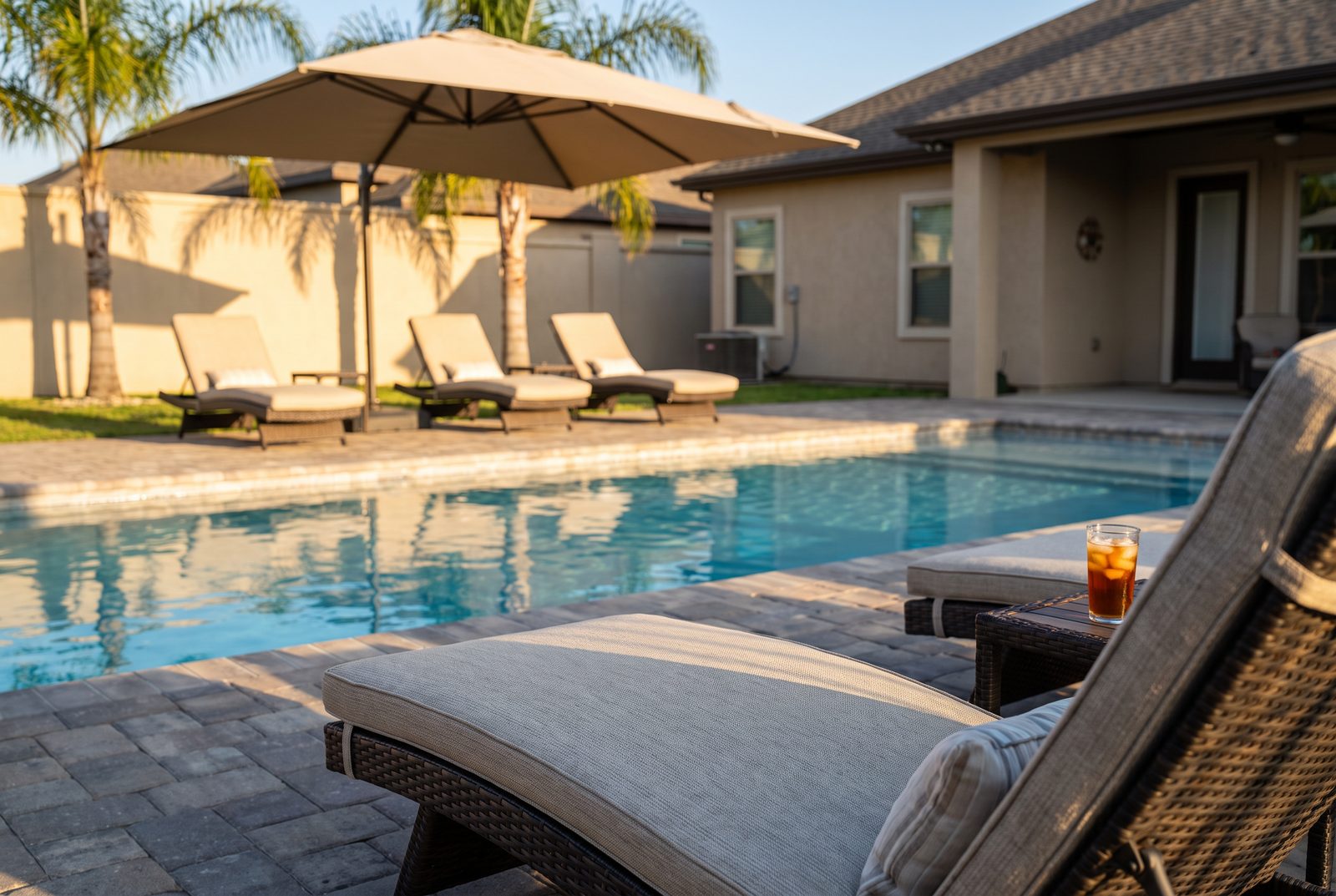
A pool makes sense if you're planning to stay in your McAllen home for several years, since it's a backyard investment that pays off in daily use during a swim season that runs from March through November here. It's also a good fit if your family already spends a lot of time outdoors and the summer heat is the main thing keeping you inside.
It's worth waiting on if you're planning to move within a year or two, or if your yard has serious drainage problems that need fixing first — a good pool builder will flag that during the site visit rather than build around it.
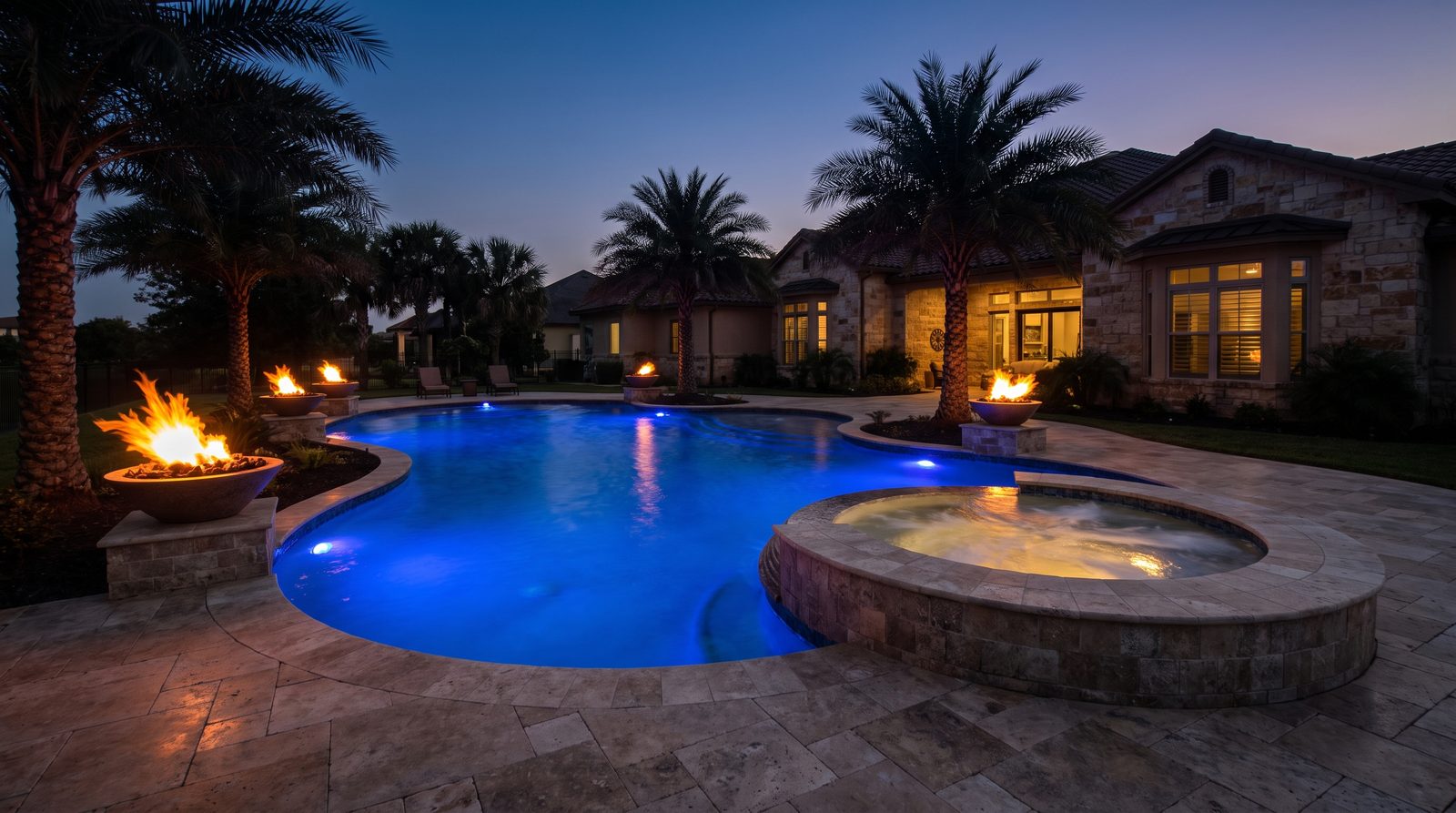
A fiberglass pool is usually swimmable within one to two weeks of the excavation crew showing up, since the shell arrives pre-formed and just needs to be set and plumbed. A gunite pool typically takes six to ten weeks from the first shovel to the first swim, because the shell has to be sprayed, cured, plastered, and the decking has to be poured and cured on its own schedule.
Yes. Article XI of the McAllen city code adopts the 2024 International Swimming Pool and Spa Code, and a pool permit is pulled before excavation starts. The application covers pool dimensions, surface area, gallon capacity, and equipment location, and carries plan review and zoning fees. Your builder should pull it and schedule the inspections as part of the job, and note that a McAllen permit goes invalid if work hasn't started within six months of issuance.
It can be. A lot of RGV lots sit over caliche, a hard, chalky layer that's tougher to dig through than plain dirt. It doesn't stop a pool from getting built, but it can mean extra excavation time and, on some lots, a piece of specialized equipment to break through it, which is worth budgeting for upfront.
Both hold up fine in South Texas heat. Fiberglass costs less, installs faster, and resists algae because the surface is smooth and non-porous, which cuts down on chemical upkeep. Gunite costs more and takes longer to build, but it can be shaped into almost any size or design and holds up for decades with periodic resurfacing.
Yes. Texas municipal codes, including McAllen's, require a barrier around residential pools with a self-closing, self-latching gate. Your pool builder can design the fencing or safety barrier into the project so it passes inspection the first time.
609 S 10th St Suite 1, McAllen, TX 78501
Please note: This is our service business address — not a storefront or showroom. McAllen Pool Builders is a pool construction contractor, so we come out to your property for design and estimates and the office isn’t open to walk-in visitors. Call us and we’ll set up a free on-site estimate.